2013 books: 40-45
Nov. 19th, 2013 01:04 pm![[personal profile]](https://www.dreamwidth.org/img/silk/identity/user.png) the_siobhan
the_siobhan |
Liar by Justine Larbalestier Micah is a liar. She repeats the lies that her family teaches her to protect themselves, lies to her parents to protect her own privacy, lies to her schoolmates for entertainment, and lies to herself. She swears he is trying to come clean to the reader, but with the habit of a lifetime to overcome it takes a while to unravel the truth. I love this book. I first heard of it because of the furor over the publisher white-washing the lead character on the cover of it's advance copies. So when I spotted it lying around BC's place I commented on the cover. BC insisted I take it home and read it even though I protested that I had quite enough books of my own to get through. |
At first I wasn't sure I was going to like it - the plot twist seemed really obvious. Then all of a sudden I got to that part of the plot and it's not the "twist" I was expecting after all and I was completely sucked in to the story. If you like YA novels at all read this, it is excellent.
 |
The Woman Warrior: Memoirs of a Girlhood Among Ghosts by Maxine Hong Kingston A semi-autobiographical account of growing up in San Francisco, the daughter to Chinese parents who fled the Japanese and continue to live in the US out of fear of the Communist regime. Episodes from her childhood are contrasted epic legends from the homeland and the stories her mother tells her about dramatic family events back in China. "Ghosts" is what they call the non-Chinese people they are now surrounded by in America, but it also seems that the characters from the stories and legends are more vital and real to the young girl than the events of her own life. A re-read from the big pile of old books. Highly recommended. |

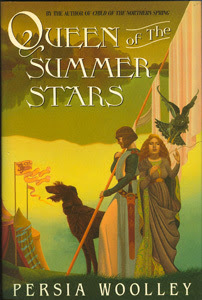

Child of the Northern Spring, Queen of the Summer Stars and The Legend in Autumn by Persia Woolley
So I finally stumbled across the first book of the trilogy buried on one of my bookshelves.
The first book sets the stage. It's the story of Guinevere's origins and childhood as a princess in Northern England. A large portion of the book is taken up by her trip south to meet the High King and her conversations with various members of the court also gives an overview of the history and political landscape.
I like the way she handles the fantastic elements of the story. The Lady of the Lake is the High Priestess of the traditional pagan religion and Excalibur is the sword that she specifically crafted for Arthur. Merlin exists and is revered as a both a wise man and a mage, but he himself admits that a lot of the stories about his powers are exaggeration that he encourages to make himself influential. At the same time, the book doesn't shy away from the fact that Guinevere believes in the powers of the Gods and she interprets the events of her life according.
Queen of the Summer Stars describes her reign as High Queen while Arthur struggles to unite Britain into a unified country capable of fighting off the Saxon invaders from the mainland and then maintain the peace afterwards. Most of the discord seems to come from the inability of the various characters to stay out of inappropriate beds but there are also the plots against Arthur by his sisters and various personal grudges that play out between the Companions of the Round Table.
The Legend in Autumn starts at the height of Camelot and tells the story of the rising power of Christianity, Guinever's conviction of "treason" (based solely on her refusal to be a properly submissive Christian wife) the Holy Grail quest, the rise of Mordred and the eventual fall of Arthur.
If I have any complaints about this series it's that because she herself does not fight, it seems like a lot of the action is about her waiting around for Arthur and doing various household chores. On the other hand, since she isn't running from battle to battle she has a lot more time to talk about the lives of the people who make up the court who are not themselves Knights, which is a something frequently left out. However there is also a lot of verbiage devoted to loving descriptions of the countryside or the decorations at events, and there were a few points where I actually had to back up when I realized that some crucial piece of action that had spun by in a short paragraph amid all the talk of banners and horses.
Still it was a fun read, not terribly deep but worth checking out if you like costume dramas or if you are a fan of the Camelot legend.