2017 books: 45-50
Nov. 12th, 2017 09:14 pm![[personal profile]](https://www.dreamwidth.org/img/silk/identity/user.png) the_siobhan
the_siobhanAt some point over the summer when I was walking home from the bus stop I passed a house that had a boxload of books out for the taking. A large chunk of them were about Ireland or by Irish writers, so I filled my knapsack with as many as I could haul.
These stories remind me of that first experience of Ireland - after the Republic but before the EU. Cork could be described as "provincial" and Galloway streets were deserted on a Wednesday night. They aren't so much stories about things happening as they are snippets of peoples' lives.
I did, however, think it very amusing that the writer made a big deal about the fact that she didn't have a phone.
The entire time I was reading this book I had to keep reminding myself this guy was in his 20's while he was doing all this. Holy crap.
True story, I was reading this book on the bus and a man with a thick Irish accent pointed at it and said, "It's the Big Man's birthday today". I checked when I got home, and yep, October 16.
Something I hadn't realized before reading this book was the extent to which the majority of the people in Dublin were against the rebels. There were many Dublin men in the British army, their pay and widow's pensions were keeping a lot of the families fed. By the time the rebels surrendered, much of the population had been unable to work or move through the city even for food for a week and they blamed the rebels for the resulting hardships. Once the uprising was over, however, public opinion softened towards them and turned against the English - for the executions of the leaders who were after all just Irish patriots, for mass arrests of Irish men who had had nothing to do with the rising, and for news of civilian murders by English soldiers when the fighting was going on. When Collins and the rest of his generation stepped into the vacuum left by the execution of so many of the IRB leaders, they had much more public support.
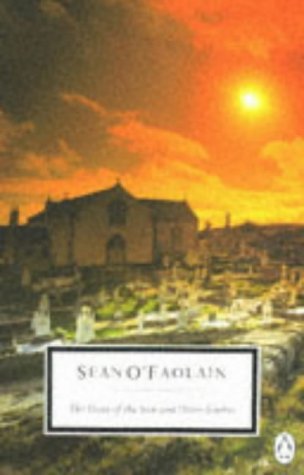 |
The Heat of the Sun and Other Stories by Seán Ó Faoláin When I was a kid my parents took my sisters and me to Ireland for a couple of months. Fiona was still a baby, so this would have been around '71. For part of the time we stayed with my grandparents in their big old farmhouse. There was no central heat so they had a fireplace in every room. I remember being fascinated that they burned dirt. The stove had to be fed fuel through a cabinet in the base, and my mother put a bed-warmer into our bed every night to warm up the sheets. The town had one telephone, a payphone near the general store, and whenever it rang whoever was passing by would answer it and run off to find the person the call was for. |
These stories remind me of that first experience of Ireland - after the Republic but before the EU. Cork could be described as "provincial" and Galloway streets were deserted on a Wednesday night. They aren't so much stories about things happening as they are snippets of peoples' lives.
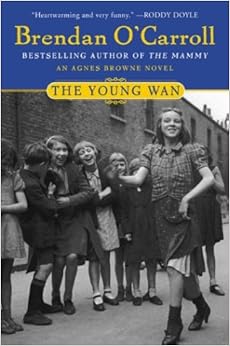 |
The Young Wan by Brendan O'Carroll Apparently this is the same guy who does "Mrs Brown's Boys"? Which isn't really my type of humour. The cover blurb seems to imply that this is also supposed to be a comedy, and the few reviews I came across describe it as "hilarious" but I don't really get what parts of it are supposed to be funny. Anyway, it's a short book about growing up in the tenements of Dublin. It's a fairly straightforward narrative, nothing complicated and it's a fast read. It didn't leave much of an impression either way, to be honest. |
 |
Nora Webster by Colm Tóibín Apparently this author also wrote Brooklyn. No dead sisters in this one, but a recently dead husband. The title character is a widow with four children who's life was very much all about her husband and now she has to make her own friends and figure out how she is going to get on with her life. The whole thing takes place in the late '60s and early '70s - there is mention of the moon landing and of Bloody Sunday. But these are very much events that are going on in the background, while other people are taking an interest in them not much seems to move the main character. I didn't really find her very sympathetic apart from the entirely too accurate description of grief. Her focus on her husband left her with no connection to anybody else in her life, including her own children. I found myself getting really impatient with her. |
I did, however, think it very amusing that the writer made a big deal about the fact that she didn't have a phone.
 |
In This House of Brede by Rumer Godden I think this story also starts in the '50s. A successful woman with a high-profile job in a government ministry gives it all up to join a Benedictine convent. Most of the story is about the interactions and conflicts between the various nuns. You wouldn't think there would much to tell about life in a convent, but I was surprised at how interesting I found this. (This book actually takes place in England, but it was in the box with the others. And you know, Catholics.) |
 |
Michael Collins: The Man Who Made Ireland by Tim Pat Coogan The title pretty much tells you everything you need to know about how Coogan views Collins, this book is definitely written by a fan. And Collins comes across as a real force of nature in this book. An incredibly smart man who was meticulously organized and so relentless in his work that he hardly ever slept, he was charming to strangers and a huge pain in the ass to his friends. He engendered either fierce loyalty or hatred in those who worked with him, and the author plainly feels that it was this antipathy and jealousy by others in the IRB that led to the him being set up to take the fall for the truce talks and the resulting civil war. |
The entire time I was reading this book I had to keep reminding myself this guy was in his 20's while he was doing all this. Holy crap.
True story, I was reading this book on the bus and a man with a thick Irish accent pointed at it and said, "It's the Big Man's birthday today". I checked when I got home, and yep, October 16.
 |
Rebels: The Irish Rising of 1916 by Peter de Rosa I don't know how I ever got the impression that the Easter Uprising was an organized rebellion, but this book dispels that misapprehension right quick. The first half of the book is very much a chain of cock-ups, misadventures and missed connections. The second half of the book is the story of less than 2500 men and women with woefully few weapons managed to hold off the British army for almost a week. |
Something I hadn't realized before reading this book was the extent to which the majority of the people in Dublin were against the rebels. There were many Dublin men in the British army, their pay and widow's pensions were keeping a lot of the families fed. By the time the rebels surrendered, much of the population had been unable to work or move through the city even for food for a week and they blamed the rebels for the resulting hardships. Once the uprising was over, however, public opinion softened towards them and turned against the English - for the executions of the leaders who were after all just Irish patriots, for mass arrests of Irish men who had had nothing to do with the rising, and for news of civilian murders by English soldiers when the fighting was going on. When Collins and the rest of his generation stepped into the vacuum left by the execution of so many of the IRB leaders, they had much more public support.